
Office Acoustic Treatment with Sound Absorbing Panels
Office noise isn't always loud enough to seem like a serious problem. More often, it's the constant mix of conversations, phone calls, meetings, keyboards, video conferences, and people moving through the space that becomes distracting.
In an open office, those sounds can travel much farther than expected. Hard floors, glass walls, exposed ceilings, and other reflective surfaces allow sound to bounce around instead of fading naturally.
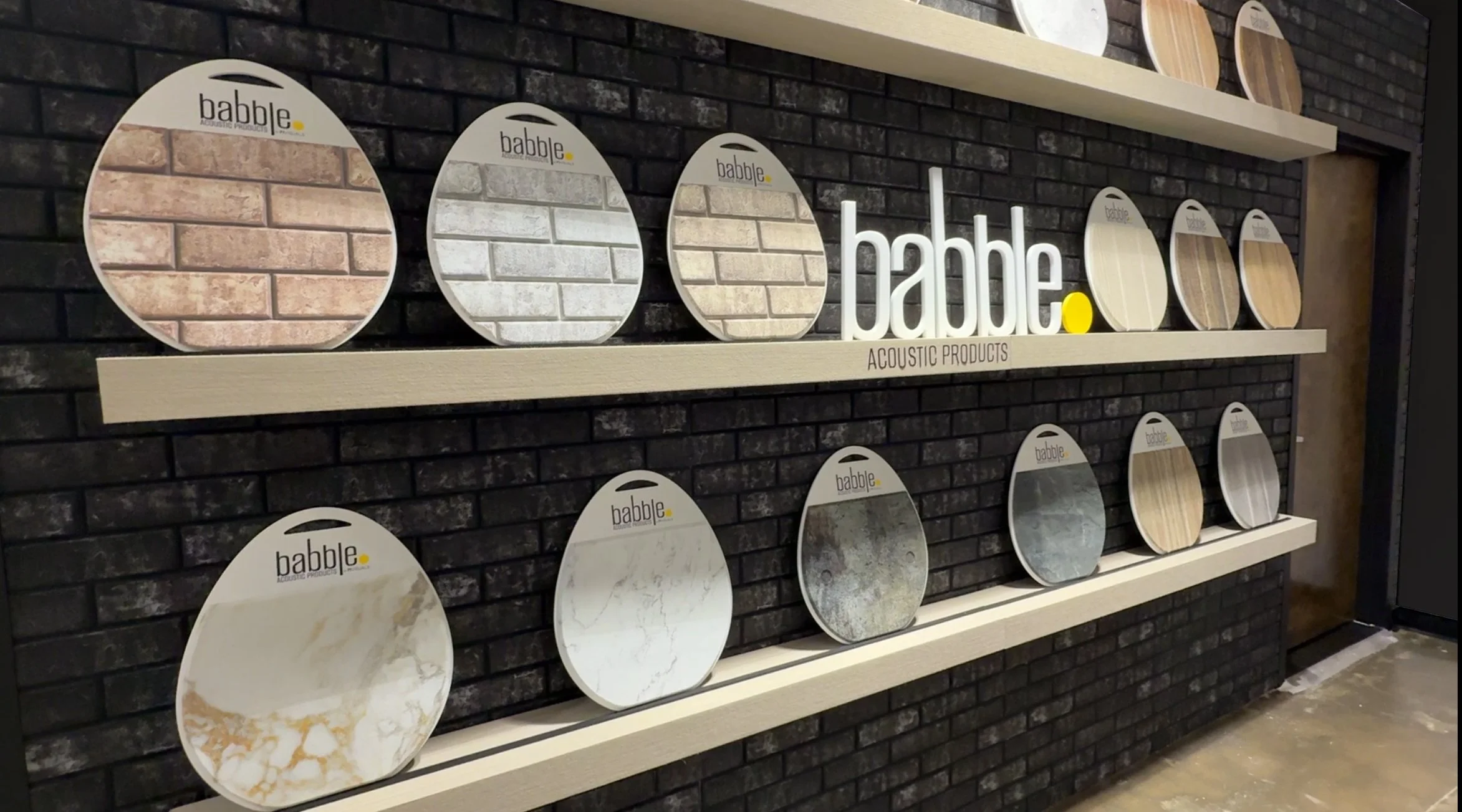
Babble Acoustics provides acoustic panels for office environments that help absorb those reflections and create more comfortable places to work. Acoustic treatment can be incorporated into walls, ceilings, work areas, and other parts of the office without taking away from the overall design.
Reducing Noise in Modern Offices
The way offices are designed has changed significantly. Private rooms and cubicles have often been replaced by open layouts, shared workstations, collaborative areas, and flexible spaces.
Those layouts can work well visually and functionally, but they create acoustic challenges.
A conversation between two employees can easily reach people several desks away. Someone taking a video call may need to speak louder to hear and be heard. Add several conversations at once and the background noise can become difficult to ignore.
This doesn't necessarily mean employees need complete silence. Most workplaces need conversation and collaboration. The challenge is keeping those sounds from dominating the entire room.
Adding acoustic panels for offices can reduce reflections and help prevent everyday office activity from feeling louder than it needs to be.
How Acoustic Panels for Offices Work
Sound behaves differently depending on the materials around it.
Soft, absorptive surfaces reduce reflections. Hard surfaces tend to send sound back into the room. Many contemporary offices have an abundance of the latter.
That's where acoustic panels for office spaces become useful.
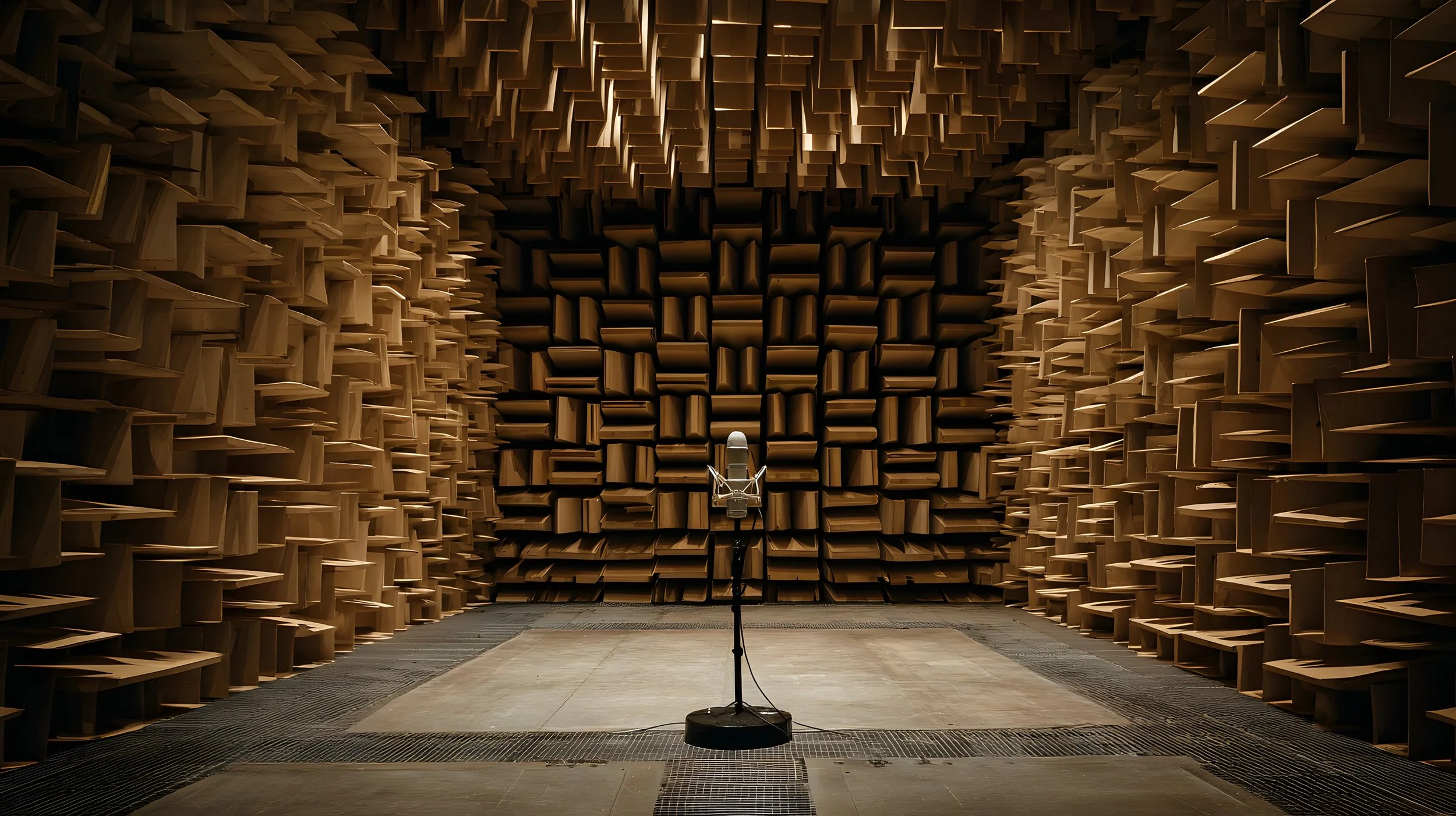
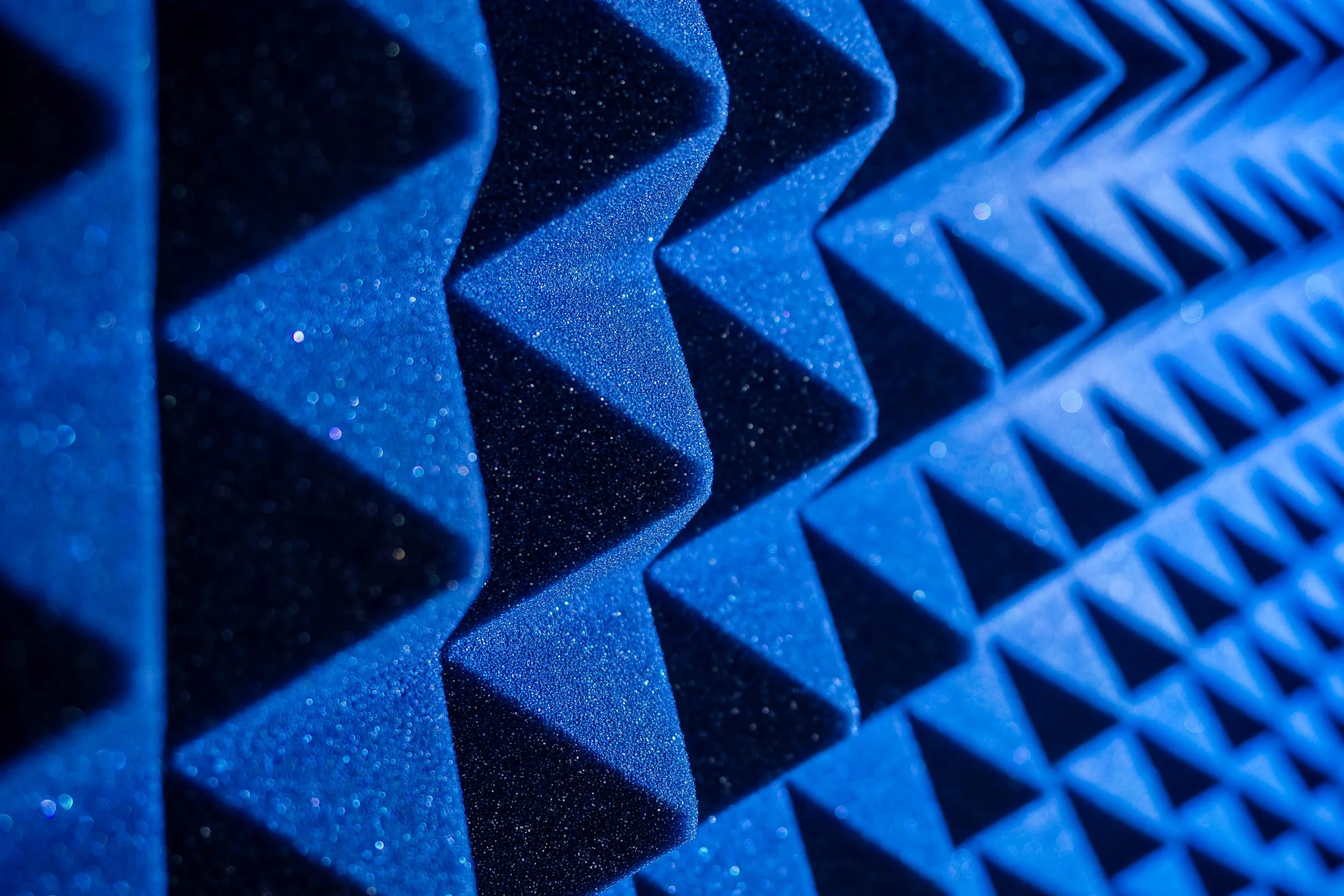
Panels absorb a portion of the sound that reaches them rather than allowing all of that energy to reflect from one surface to another. This can reduce reverberation and echo, making speech and other office sounds feel more controlled.
Placement is an important part of the process. Simply adding acoustic panels for offices wherever there is an empty wall isn't necessarily the most effective approach.
The size of the room, ceiling height, workstation layout, existing finishes, and locations where conversations happen should all be considered when planning acoustic treatment.
Open Offices Aren't the Only Spaces That Need Treatment
Noise problems can show up throughout an office.
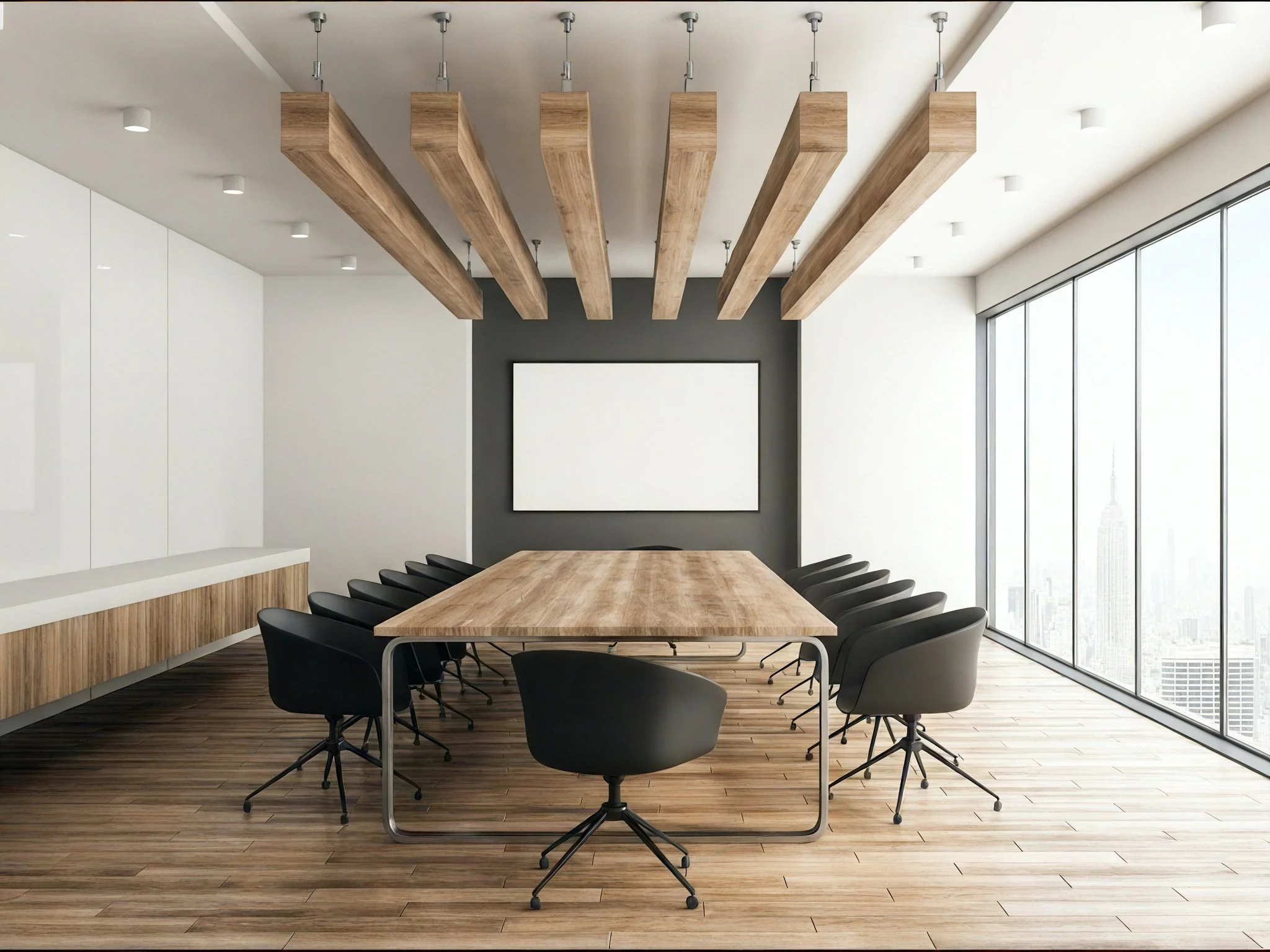
Conference rooms with glass walls may look clean and modern but can sound hollow during meetings. Video calls become more difficult when voices reflect repeatedly around the room.
Break rooms and shared kitchens can become noisy during busy periods. Reception areas need to accommodate conversations without allowing them to spread throughout nearby workspaces. Training rooms and collaborative areas may need enough absorption to maintain clearer speech when several people are participating.
Soundproofing Options for Noisy Office Spaces
Office noise can involve two different problems: sound reflecting within a room and sound traveling between rooms.
Acoustic panels for offices primarily address the first issue. Wall panels, ceiling treatments, acoustic baffles, desk dividers, and privacy screens can introduce absorption into spaces where reflected sound is contributing to excessive noise.
Sound transmission is different.
If conversations in a conference room can clearly be heard in the office next door, the issue may involve the walls, ceiling, doors, or other parts of the building. Acoustic panels for offices can improve conditions inside the conference room, but they aren't automatically a replacement for proper sound isolation.
Knowing which problem you're trying to solve helps avoid unnecessary treatment and leads to a more appropriate acoustic plan.
Four Steps to Better Office Acoustics
01
Understand the Noise Problem
Start with what people are actually experiencing. Is conversation traveling across an open office? Are meeting rooms too reverberant? Does a collaborative area interfere with nearby individual work?
Identifying the problem is more useful than simply deciding the office needs more panels.

03
Plan Where the Treatment Goes
More isn't automatically better. Strategic placement allows acoustic materials to address important reflection points while remaining integrated into the workspace.
Room dimensions, ceiling height, furniture, glass, and other finishes should all be considered.We outline initiatives, resource requirements, and timelines in a structured roadmap.
04
Complete the Installation
Once the products and layout have been determined, installation can be planned around the office and its normal operations. Requirements vary depending on the selected acoustic product and mounting method.
Choose the Right Acoustic Materials
Different areas may call for different treatments. Wall panels may work well in one room, while ceiling-mounted products or workspace dividers may make more sense somewhere else.
The right choice depends on the layout, available surfaces, design, and acoustic goal.
02
Creating a More Comfortable Place to Work
Employees shouldn't have to fight the room itself to concentrate or have a conversation.
A well-planned acoustic environment still allows an office to feel active and collaborative. It simply gives unwanted sound fewer opportunities to spread.
Babble Acoustics provides acoustic panels for office spaces ranging from open work areas and conference rooms to reception areas and private offices. By combining acoustic performance with flexible design options, sound treatment can become a natural part of the workplace.
Contact Babble Acoustics to discuss your office and determine which acoustic products make sense for the way your team actually uses the space.
Frequently Asked Questions
-
Installation depends on the product and the surface being treated. Acoustic panels for offices may use different mounting methods for walls, ceilings, desks, or other locations. Installation requirements should be confirmed for the specific product selected.
-
There isn't one coverage ratio that works for every office. Room dimensions, ceiling height, existing finishes, number of occupants, and the acoustic problem all influence how much treatment is appropriate.
-
Yes, depending on the selected Babble Acoustics product. Acoustic treatments can offer design flexibility through elements such as colors, shapes, layouts, and decorative options, allowing them to complement the existing workplace.
-
Fire-performance requirements and ratings vary by product. For commercial office projects with specific building code or fire-safety requirements, the relevant product documentation should be reviewed before specifying the material.
-
Acoustic panels for offices primarily absorb sound reflections and help reduce reverberation within a space. Preventing conversations or other noise from passing between separate rooms may require additional sound-isolation measures.