
Home Theater Soundproofing & Acoustic Panels
A good home theater isn't only about the speakers, screen, or receiver. The room itself has a major influence on what you hear.
You can invest in a carefully selected audio system and still end up with dialogue that sounds unclear, bass that feels overwhelming in one part of the room, or surround effects that lose definition. Often, the equipment isn't the problem. Sound is reflecting from the walls, ceiling, floor, and other hard surfaces before it reaches your ears.
Acoustic panels for home theater spaces help control those reflections so you can hear more of what your audio system was designed to deliver. Babble Acoustics offers acoustic solutions that can be incorporated into dedicated theaters, media rooms, and multipurpose entertainment spaces without making the room feel like a recording studio.
Why Home Theater Acoustics Matter
When a speaker produces sound, you don't only hear the sound traveling directly from the speaker to your listening position.
Some of it reaches the walls and ceiling first and then reflects back toward you. Those reflections arrive slightly later than the direct sound. When too many strong reflections reach the listening position, dialogue and other details can become less distinct.
The room can also make certain frequencies seem louder or less balanced depending on where you're sitting.
Acoustic panels for home theaters help manage the room's contribution to what you're hearing. The objective isn't to absorb every sound. It's to create a more controlled environment where direct sound from the speaker system isn't competing unnecessarily with the room.
Managing Early Reflections
Early reflections are an important consideration in home theater design.
Sound coming from the front and surrounding speakers can bounce from nearby walls and the ceiling before reaching the seating area. These reflections can interfere with the clarity and positioning of the original audio.
Strategically placed acoustic panels for home theater rooms can absorb some of that reflected energy.
Side walls are common treatment areas because of their proximity to the main listening position and front speakers. Depending on the room and speaker layout, ceiling reflections may also need attention.
Controlling these areas can help dialogue remain clearer while allowing details in music, effects, and the overall soundstage to come through more naturally.
Instead of simply covering every available wall, panel placement should respond to the room, seating position, and speaker arrangement.
Getting Better Control of Bass
Bass creates a different challenge.
Low frequencies interact strongly with room dimensions and boundaries. In an untreated theater, bass may sound heavy or muddy in one seat while feeling noticeably weaker somewhere else.
Adding standard wall absorption alone doesn't necessarily solve every low-frequency problem.
Bass traps and other treatments intended for lower frequencies can be considered where buildup is occurring. Corners are often important areas because of the way low-frequency energy behaves around room boundaries.
The goal is tighter, more controlled bass rather than simply less bass.
When bass is better managed, explosions and sound effects can retain their impact without overwhelming dialogue, music, and the rest of the soundtrack.
Creating a Balanced Home Theater
Too much absorption can create its own problem.
A room covered extensively in absorptive material may lose some of the natural energy that makes a movie soundtrack feel spacious and immersive. That's why a thoughtful home theater treatment plan isn't necessarily about installing as many panels as possible.
A balanced approach can use absorption where reflections need to be controlled while considering diffusion or other treatments where maintaining sound energy is beneficial.
Diffusion works differently from absorption. Instead of removing sound energy, a diffuser scatters reflections in multiple directions. Used appropriately, this can help maintain a sense of spaciousness without leaving strong, distracting reflections untreated.
The appropriate balance depends on the room.
A small media room may require a different approach from a large dedicated theater with multiple seating rows and a more complex surround system.
Acoustic Panels That Belong in the Room
A home theater is also a designed space.
Some homeowners want a traditional cinema look with dark walls and subtle acoustic panels for home theaters. Others are creating media rooms that remain visible as part of the home and need the acoustic materials to complement the furniture, lighting, and finishes.
Acoustic treatment can be planned with those visual considerations in mind.
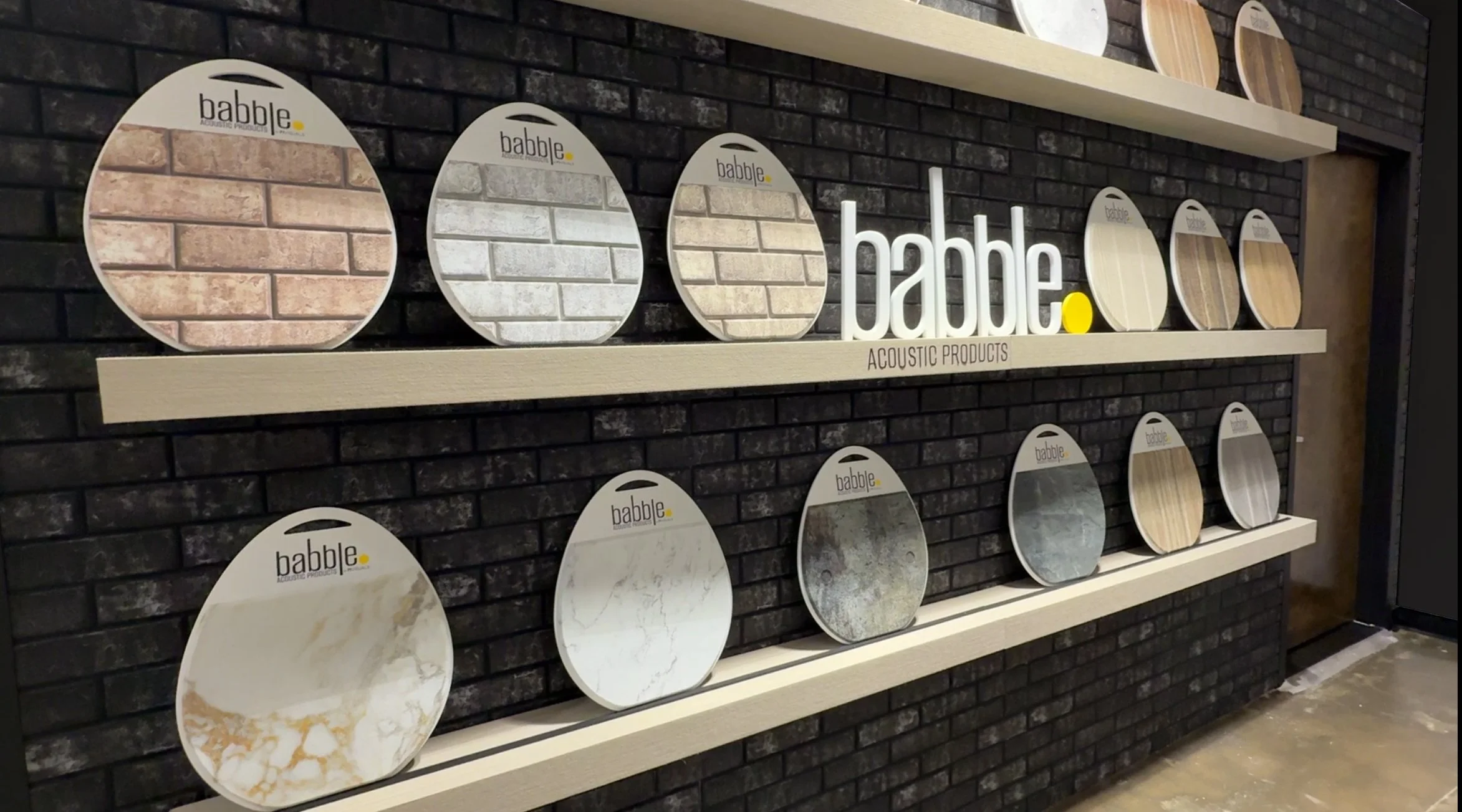
Depending on the selected Babble Acoustics products, panels can offer flexibility in color, shape, layout, and decorative treatment. This allows the acoustic system to become part of the room rather than something that needs to be hidden.
Home Theater Soundproofing vs. Acoustic Treatment
These two terms are commonly confused.
Acoustic treatment improves how sound behaves inside the theater. Products such as acoustic panels, bass traps, and diffusers can help manage reflections, reverberation, and frequency buildup.
Soundproofing addresses sound traveling outside the theater or entering from another part of the home.
If the goal is to keep a late-night movie from being heard in a nearby bedroom, the solution may involve walls, ceilings, floors, doors, and other parts of the room's construction. Adding absorption inside the theater can improve the listening experience, but it doesn't automatically isolate the room from the rest of the house.
A home theater project may need acoustic treatment, sound isolation, or a combination of both depending on the goals.
Hear More From Your Home Theater
A high-quality audio system can only do so much when the room is working against it.
Thoughtfully placed acoustic panels for home theater spaces can control unwanted reflections, improve clarity, and help create a more balanced listening environment. Bass treatment and diffusion can then be considered as part of a broader approach based on the room and audio system.
Babble Acoustics offers acoustic solutions that allow performance and interior design to work together.
Contact Babble Acoustics to discuss your home theater, media room, or entertainment space and explore acoustic treatment designed around the way you actually listen.
Frequently Asked Questions
-
Placement depends on the speaker locations, seating position, and room dimensions. Side-wall and ceiling reflection areas are common places to consider, but treatment should be planned around the specific theater rather than following a universal layout.
-
There isn't one coverage percentage that works for every theater. Room size, construction, furnishings, speaker arrangement, and the amount of existing absorption all influence how much treatment may be appropriate. Excessive absorption can also make a room sound unnaturally dead.
-
Customization depends on the specific product. Available options may include different colors, layouts, shapes, and decorative finishes, making it possible to coordinate acoustic treatment with the theater's interior design.
-
DIY installation may be possible for certain products, depending on the mounting system and location. Always follow the installation requirements for the specific product, particularly for overhead or ceiling-mounted treatments.
-
Not by themselves. Acoustic panels for home theaters primarily manage reflections within the theater. Reducing sound transmission to neighboring rooms generally requires sound-isolation strategies involving the walls, ceiling, floor, doors, or other parts of the building assembly.